It’s not Early Spring Vegetable Planting Chart yet time for the last frost, but the pull of gardening is real. Or maybe you’re looking at an empty patch of soil with seed catalogs strewn around the table, thinking, “Is it really time for me to start planting?” So are some plants—I mean, come on: Who doesn’t want a flourishing garden come June? But understanding what to plant and when is the difference between a struggling garden and one that yields a bounty.
For many new gardeners, the worst mistake is planting cool-weather crops too late or warm-weather plants too early — and having a late freeze do them in. In this full guide, you’ll learn the science behind planting in early spring. We also offer a comprehensive, step-by-step planting chart for 2026, tailored Early Spring Vegetable Planting Chart for gardeners in the US, UK and Canada. You’ll learn how to interpret your local frost dates, the difference between cool-season and Early Spring Vegetable Planting Chart warm-season veggies, and month-by-month guidance on getting a bountiful harvest. No matter if you have a sprawling backyard or a few pots on a patio, this guide makes it simple so you can try your hand at growing with confidence.
Understanding Your 2026 Spring Planting Window
Before you put a single seed in the ground, you need to understand your garden’s specific timeline. Spring planting isn’t a single date on a calendar; it’s a season of transitions.
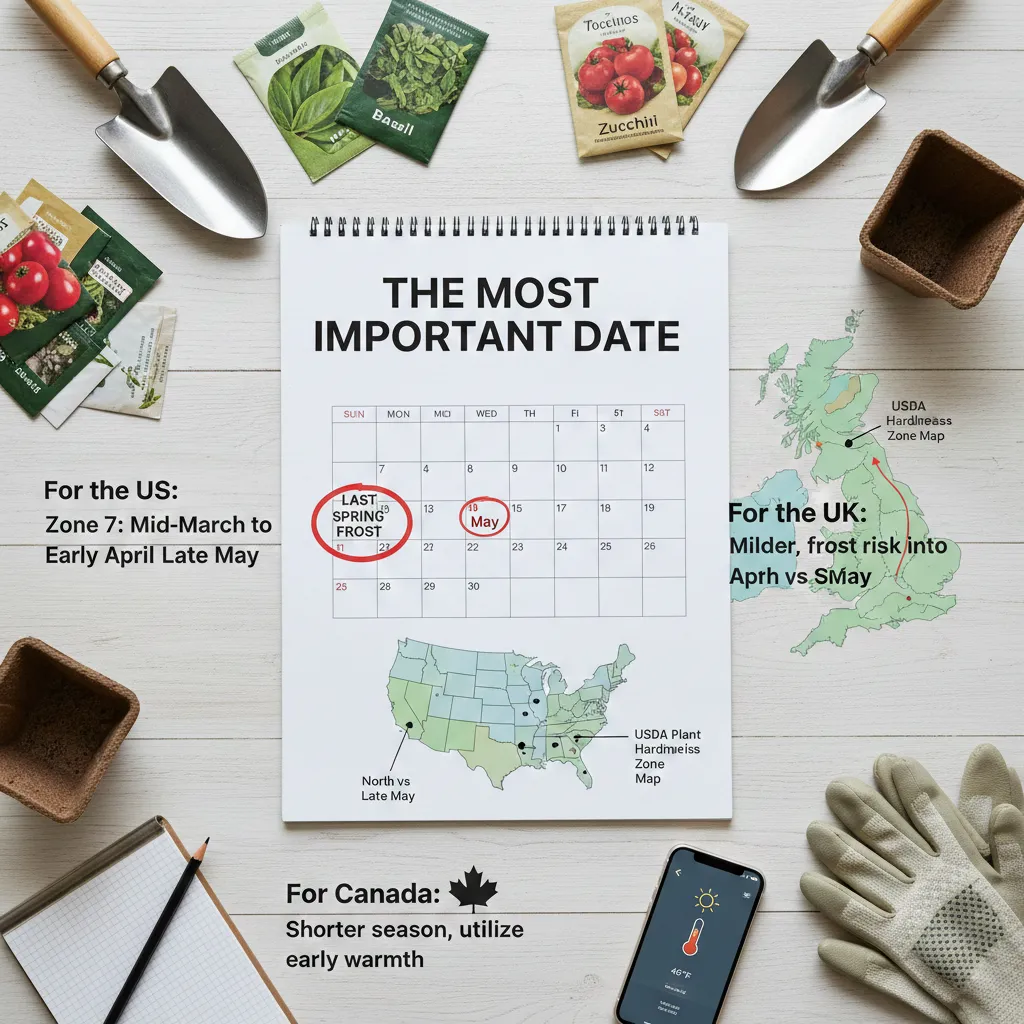
The Most Important Date: The Last Spring Frost
Your entire planting schedule revolves around the average date of the last frost in your area. This is the day after which it is generally safe to assume temperatures won’t drop low enough to kill tender plants.
- For the US: Use the USDA Plant Hardiness Zone map.Early Spring Vegetable Planting Chart A gardener in Zone 7 (with a last frost mid-March to early April) will start much earlier than a gardener in Zone 4 (with a last frost in late May) .
- For the UK: The UK is generally milder, but frost is still a risk well into April or May, depending on your region (north vs. south).
- For Canada: Due to the shorter growing season, utilizing early spring warmth is critical. Planting must be efficient.
Cool-Season vs. Warm-Season Crops
The secret to a long harvest is knowing that vegetables fall into two distinct categories:
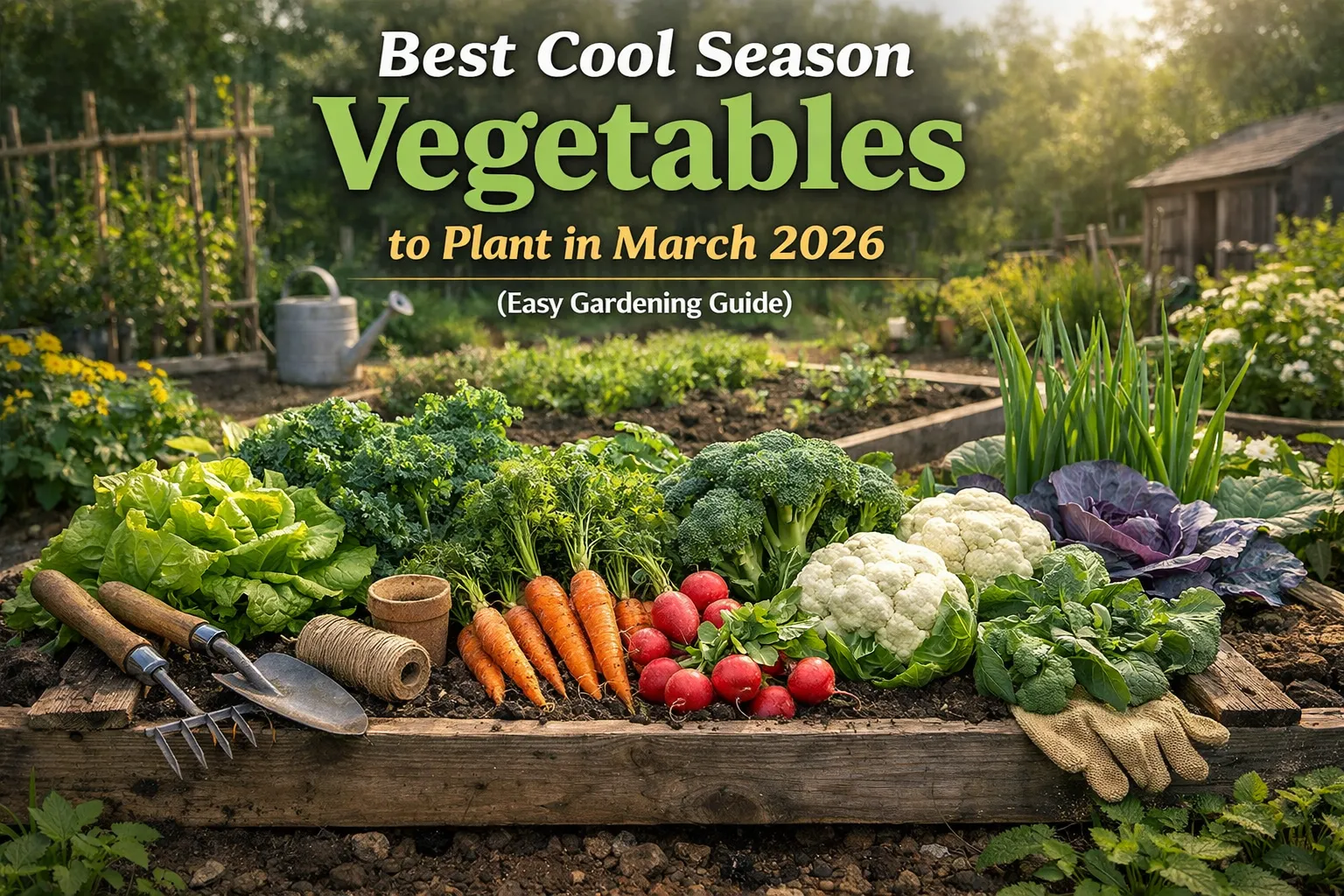
- Cool-Season Crops (The Early Birds): These plants thrive in the cool weather of early spring. They can tolerate a light frost and often taste sweeter after a nip in the air. Think lettuce, spinach, peas, carrots, broccoli, and kale . These are the first into the ground.
- Warm-Season Crops (The Waiters): These plants originated in tropical climates. Early Spring Vegetable Planting Chart They absolutely cannot tolerate frost and need warm soil (both day and night temperatures) to thrive. Tomatoes, peppers, cucumbers, and beans fall into this category . If you plant them too early, they will sulk, stop growing, or die.
Early Spring Vegetable Planting Chart for 2026
How to use this chart: Find your general climate or zone. Count backwards or forwards from your Last Frost Date (LFD) . For example, if your last frost is around April 1st, “4-6 weeks before LFD” means planting in mid-to-late February.
Month-by-Month Spring Action Plan for 2026
February
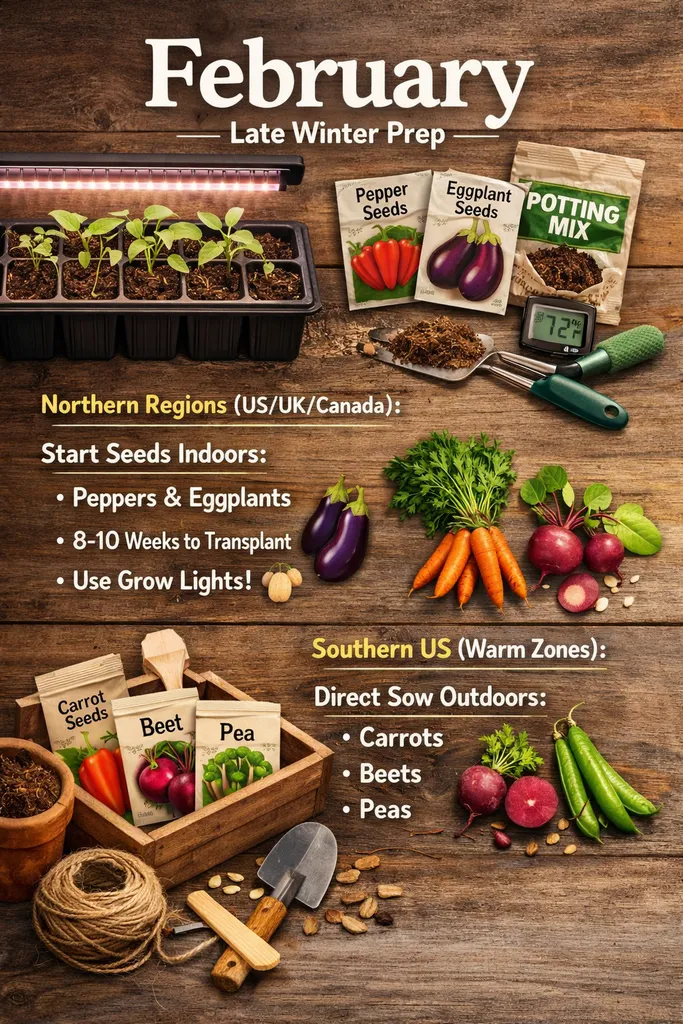
- Northern Regions (US/UK/Canada): This is Early Spring Vegetable Planting Chart the prime time to start slow-growing, warm-season seeds indoors. Peppers and eggplants need to be started now because they take 8-10 weeks to reach transplant size . Use grow lights to prevent leggy seedlings.
- Southern US (Warm Zones): You can begin direct sowing carrots, beets, and peas outdoors .
March
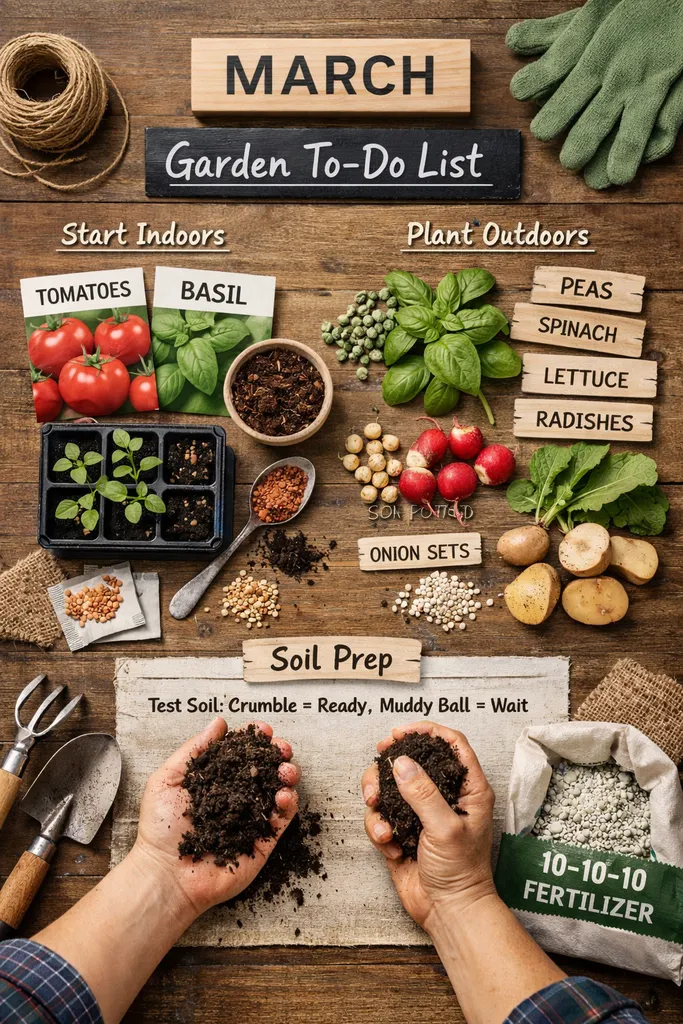
- Indoors: Start tomatoes and basil seeds indoors .
- Outdoors (Cool Crops): In most zones (5-8), direct sow peas, spinach, lettuce, and radishes. Plant onion sets and potato pieces .
- Soil Prep: If the soil is dry enough (squeeze a handful—if it crumbles, it’s ready; if it forms a muddy ball, wait), till in compost and a balanced fertilizer like 10-10-10 .
April
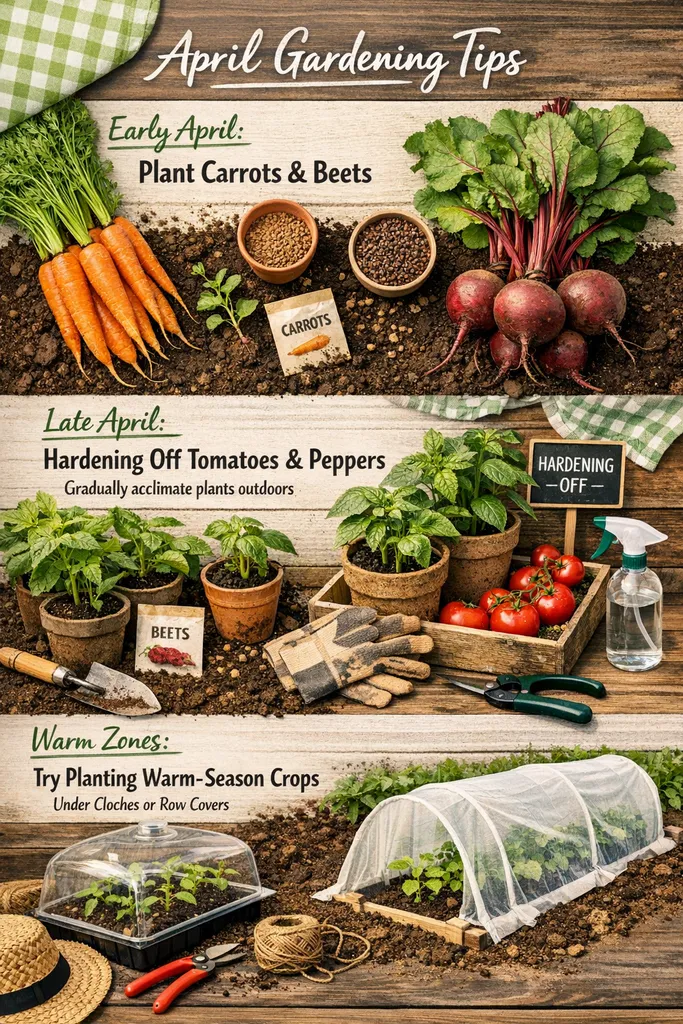
- Early April: Continue planting cool crops. Early Spring Vegetable Planting Chart Plant carrots and beets .
- Late April: Begin “hardening off” your indoor tomato and pepper plants. Take them outside for a few hours each day, increasing exposure gradually .
- Warm Zones: In the South and warmer UK microclimates, you might risk planting warm-season crops under cloches or row covers at the end of the month .
May
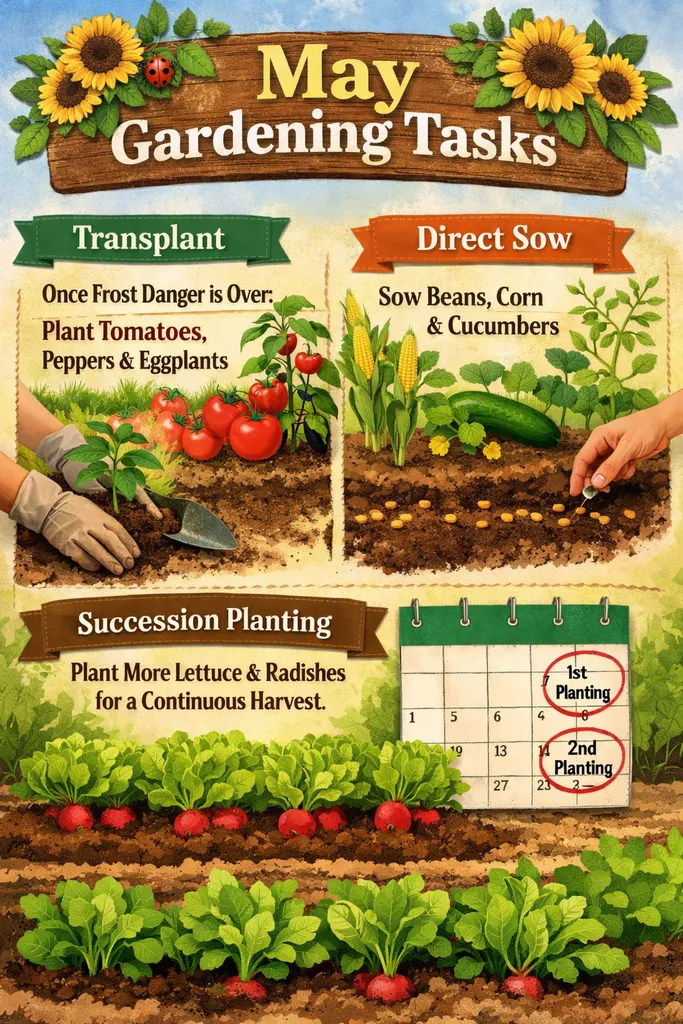
- Early May: Keep an eye on the forecast. If the danger of frost has passed (Soil temperature is consistently above 60°F), this is the time to transplant tomatoes, peppers, and eggplants .
- Direct Sow: Sow beans, corn, and cucumbers Early Spring Vegetable Planting Chart directly into the warm soil .
- Succession Planting: Plant a second round of lettuce and radishes to ensure you have a continuous supply, rather than one giant harvest that all matures at once.
Essential Tips for a Thriving 2026 Garden
1. Mastering the “Hardening Off” Process
Indoor seedlings live a pampered life. Early Spring Vegetable Planting Chart You cannot simply take a tomato plant grown under a 75°F grow light and stick it in the ground on a windy 50°F day. This shocks the plant. About 7-10 days before transplanting, place them in a sheltered outdoor spot for 1-2 hours, gradually increasing the time and sun exposure each day . This thickens their cell walls and prepares them for the real world.
2. Protect Your Garden from “False Spring”
A “false spring” is a period of warm weather followed by a sudden freeze. Always keep row covers or old bedsheets handy. If a late freeze is predicted (often called a “blackberry winter” in some regions), cover your tender Early Spring Vegetable Planting Chart transplants and even your cool-season crops overnight to trap radiant heat from the soil . Remove the covers in the morning.
3. The Power of Mulch
Once the soil has warmed up in late spring (around May), apply a 2-3 inch layer of organic mulch (straw, wood chips, shredded leaves) around your plants . This does three things:
- Conserves moisture: Reduces the need to water as frequently.
- Suppresses weeds: Blocks sunlight from reaching weed seeds.
- Regulates soil temperature: Keeps roots cool in summer and warm during cool spring nights.
4. Watering Wisdom
Spring weather can be unpredictable. Water yourEarly Spring Vegetable Planting Chart garden deeply in the morning. This allows the foliage to dry out during the day, which is the number one way to prevent fungal diseases like powdery mildew and blight . Seedbeds need consistent moisture to germinate, but once plants are established, it’s better to water deeply a few times a week than a little bit every day. This encourages deep root growth.
FAQs
1. When should I start my seeds indoors for 2026?
Most cool-season crops like Broccoli and Cabbage should be started 6–8 weeks before your last expected frost date.
2. Can I plant seeds if there is still snow on the ground?
No. While some seeds (like Spinach) can germinate in cold soil, the ground must be thawed and not waterlogged.
3. What is the “Last Frost Date” for 2026?
This varies by region. In the UK, it’s often mid-May. In the US (Zone 6), it’s late April. Always check your local meteorological data.
4. Why are my early spring pea seeds rotting?
This usually happens in soil that is too wet and cold. Try pre-sprouting them on a damp paper towel indoors first.
5. Do I need to water in early spring?
Spring usually provides enough rain, but check the top inch of soil. If it’s dry, water in the morning so the plants dry before evening frosts.
6. How do I protect transplants from “Frost Shock”?
“Harden them off” by placing them outside for 1 hour on day one, 2 hours on day two, and so on, over a week.
7. Can I grow carrots in containers?
Absolutely. Use “Nantes” or “Paris Market” varieties which have shorter roots, perfect for pots.
8. What is the best organic fertilizer for spring?
Well-rotted manure or seaweed extract provides a gentle nitrogen boost for leafy growth.
9. How do I stop slugs in the early spring?
Slugs love damp spring weather. Use copper tape or beer traps to protect tender lettuce.
10. Is it too early for tomatoes?
Yes. Tomatoes are “Warm-Season” crops. Wait until the soil is consistently above 15∘C.
11. What are “Sets” for onions?
Sets are small, immature onion bulbs. They are much easier for beginners to plant than seeds.
12. Can I use old seeds from last year?
Most seeds last 2–3 years, but Lettuce and Parsnip seeds lose viability quickly. Test them by placing a few in a damp paper towel to see if they sprout.
Table of Contents
Final Verdict
Vegetable gardening in early spring is a test of Early Spring Vegetable Planting Chart patience and preparation. As you consider the 2026 growing season, fight the impulse to hasten warm-weather crops but don’t overlook a narrow Early Spring Vegetable Planting Chart window of opportunity represented in cool-season plants. That chart gives you the road map, but the key to success is understanding your own local microclimate.
Start small. Enrich your soil with organic matter now. Order your seeds, and get an indoor growing station in place for all those peppers and tomatoes. For example, adhering to the “4 – 6 weeks before” and “2 – 3 weeks after” rules about your last frost date helps you fall in step with the rhythm of nature rather than working against Early Spring Vegetable Planting Chart them.
Don’t forget: every seasoned gardener has killed something to an unexpected frost, or a failed seedling. Forget about perfectionism and dirty your hands. Just putting that small seed in the soil is an investment in your well-being, providing not only fresh air and healthy food but also profound satisfaction from nature to plate. Here’s to a hallucinatory 2026!

Leave a Reply