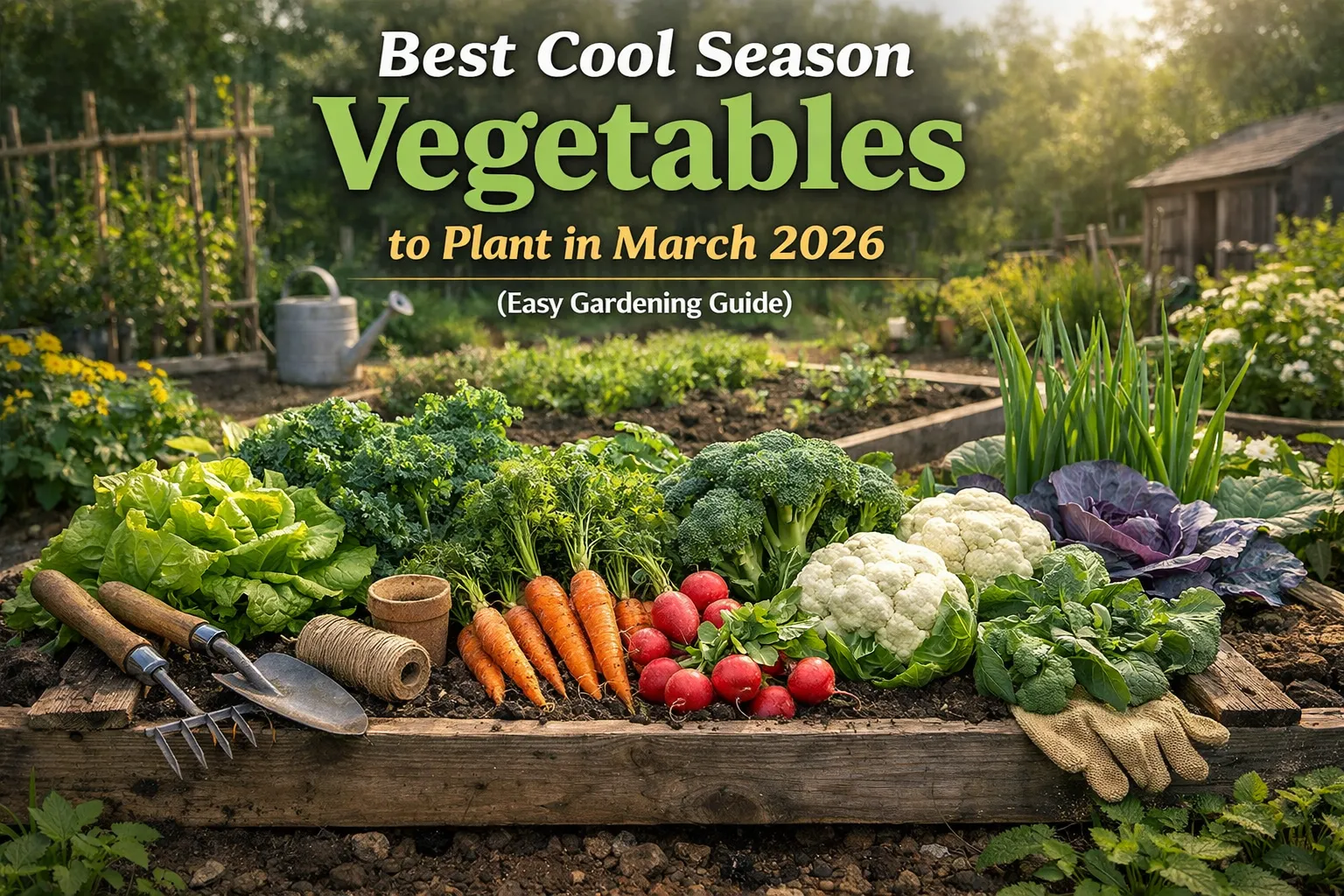
March is a transitional month. Things are starting to thaw out, and the daylight is getting longer. For a particular group of vegetables called “cool-season crops,” these conditions are perfect. While tomatoes and peppers thrive in stifling heat, cool-season vegetables bulk up better when the temperature of the air around them is between 55°F and 65°F (13°C – 18°C).
best cool season vegetables to plant in March, such as spinach and carrots, are sweeter when grown in cool temperatures. A frost can even make kale and brussels sprouts taste sweeter.
Planting early allows you to harvest a full crop of lettuce or radishes long before the time is right to plant your warm-season vegetables, making the best use of your garden.
Why Plant Cool Season Vegetables in March?
Planting early allows you to harvest a full crop of lettuce or radishes long before the time is right to plant your warm-season vegetables, making the best use of your garden.
Planting in March offers several distinct advantages:
- Superior Flavor: Crops like spinach and carrots develop higher sugar content when grown in cool weather. A frost can actually make kale and brussels sprouts taste sweeter .
- Fewer Pests: Many common garden insects are not yet active in early spring, giving your seedlings a chance to establish without being devoured .
- Extended Harvest: By planting early, you can harvest a full crop of lettuce or radishes before it’s time to plant your warm-season vegetables, maximizing your garden’s productivity.
Top 10 Cool Season Vegetables to Plant in March
This is a very important month because the soil starts to awaken. Here are the 10 best vegetables to plant now that will reward you with a bountiful, nutrient-dense harvest long before summer’s heat sets in.
1. Peas
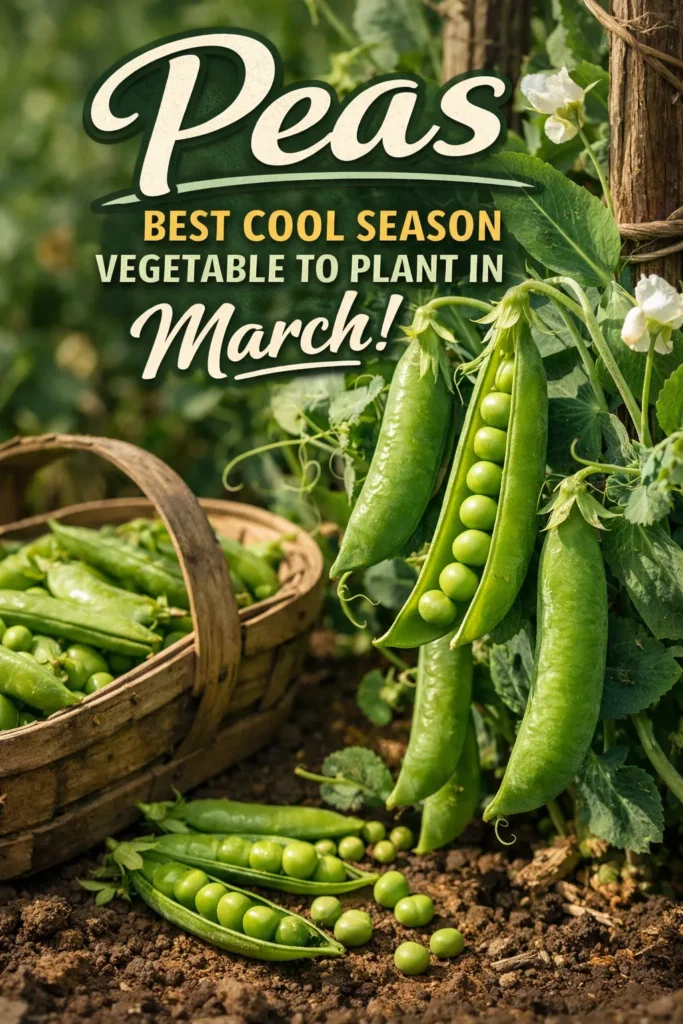
Peas are the quintessential early spring crop, thriving in the damp, cool soil of March. They are highly resilient and can handle light frosts with ease.
- Why Plant Now: Peas require cool weather to produce sugar. If planted too late, the heat of June will make the pods starchy and the vines will wither quickly.
- 2026 Recommendation: ‘Sugar Ann’ snap peas are top on the list for yield in small spaces. Heirloom Favorite: The ‘Blue Podded Desiree’ is a deep purple pod in 2026, which is sure to be a visual stunner.
- Care: Provide a trellis or “pea brush” early. Ensure they have consistent moisture, as dry soil during the flowering stage will lead to poor pod development.
2. Spinach
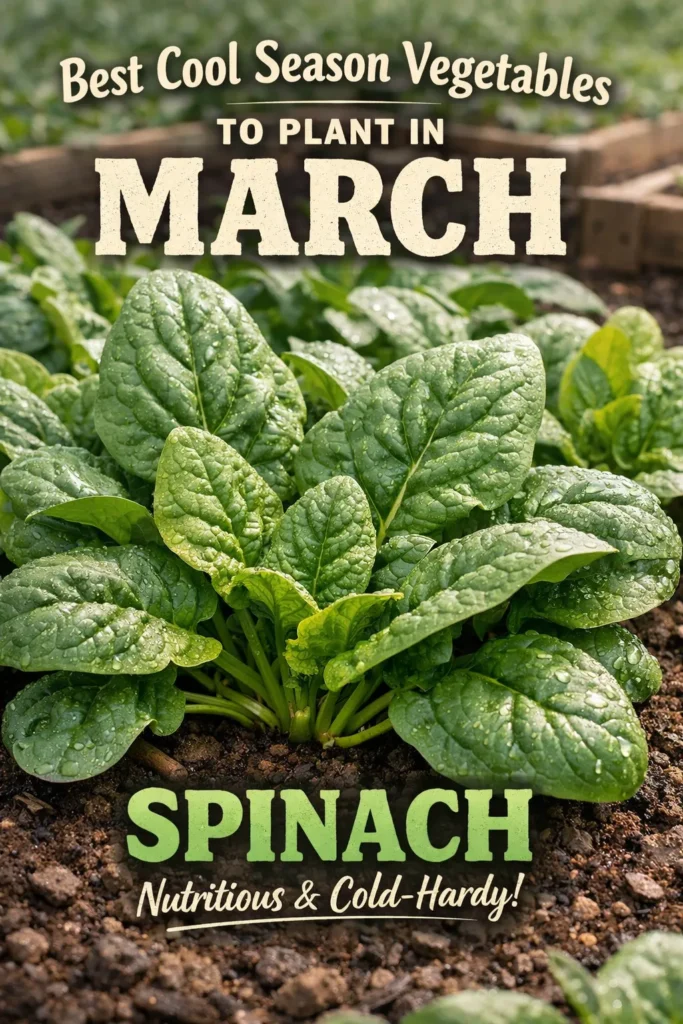
Spinach is arguably the most cold-hardy leafy green available. It can germinate in soil temperatures as low as $2^{\circ}\text{C}$.
- Why Plant Now: Cool weather keeps spinach tender and prevents “bolting” (going to seed). Once days get longer and hotter, spinach quickly turns bitter.
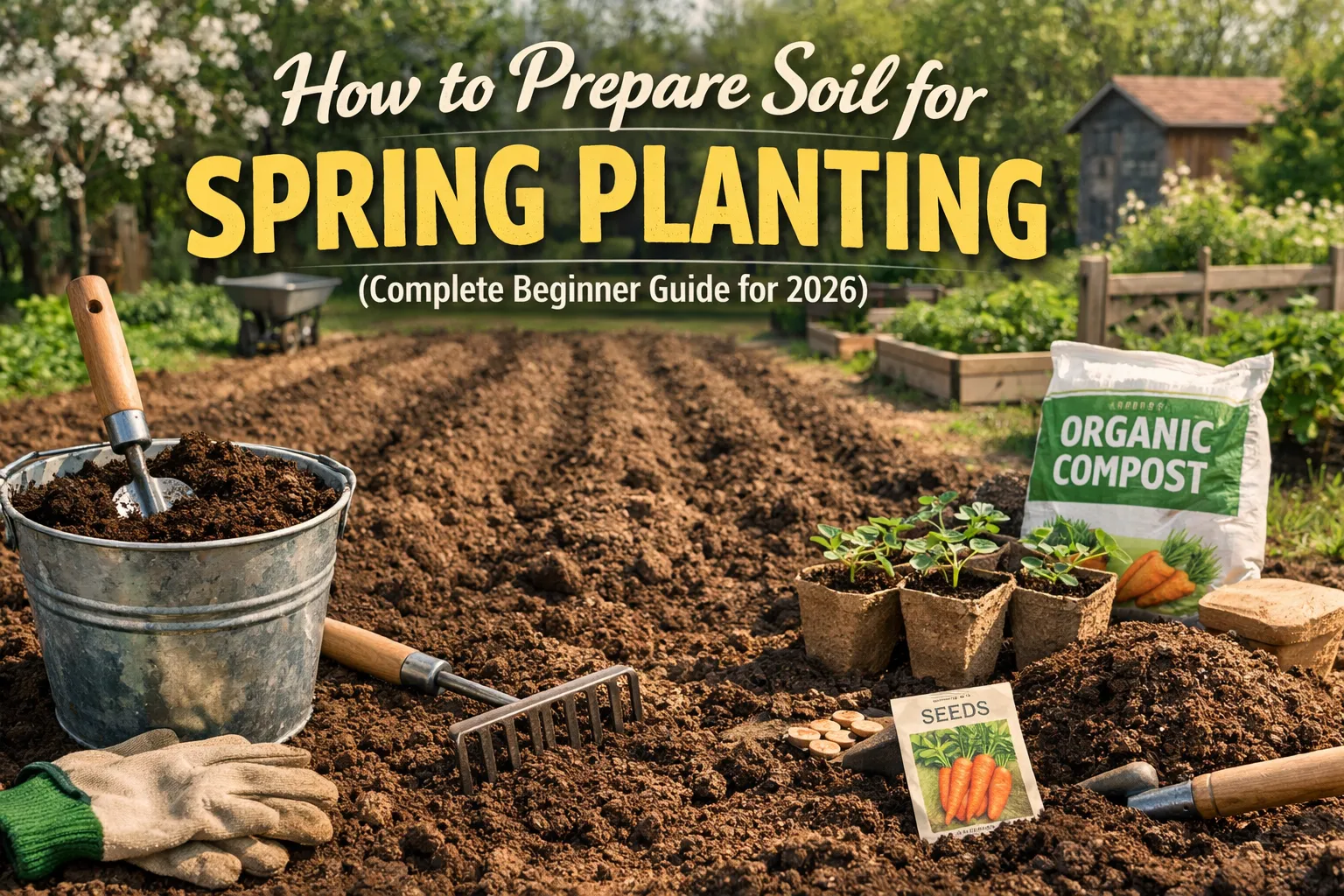
- 2026 Recommendation: This is one of the most important steps. Don’t work soil when it is wet, or you will destroy its structure. When the soil is crumbly (not muddy), loosen the top 6-8 inches and incorporates 2-4 inches of compost or organic matter. That enhances drainage and adds nutrients.
- Care: Mulch heavily with organic straw to keep the roots cool and the leaves clean from mud splashes during spring rains.
3. Radishes
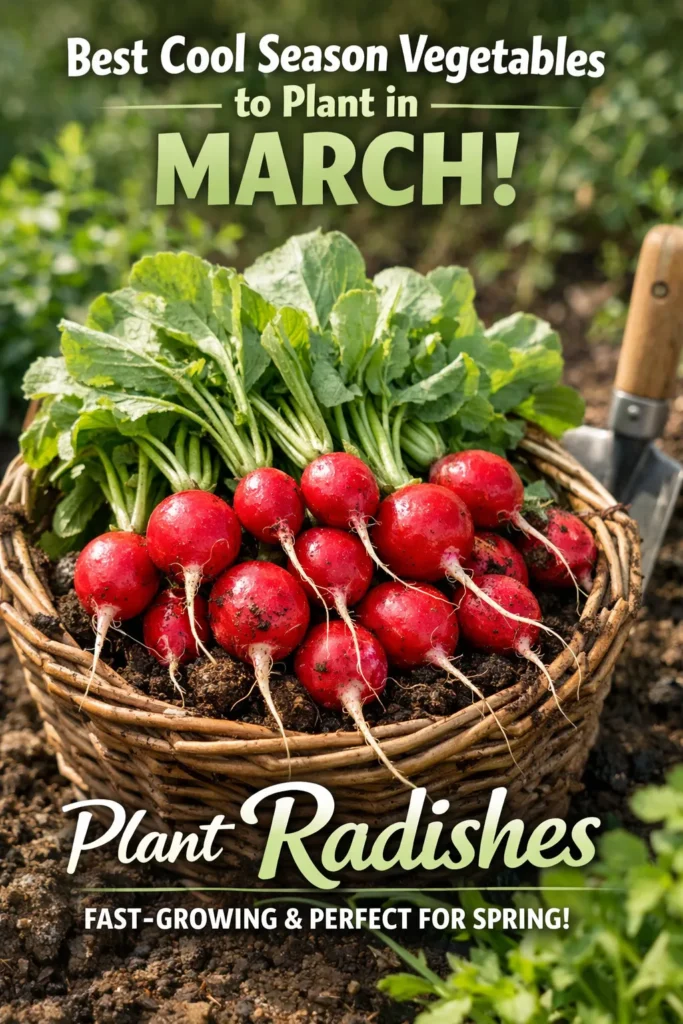
Radishes are the “instant gratification” crop of the garden, often going from seed to plate in less than a month.
- Why Plant Now: Radishes grown in cool weather stay crisp and mild. Heat makes them woody and overwhelmingly spicy.
- 2026 Recommendation: The ‘French Breakfast’ radish is trending for its elegant oblong shape, but for a 2026 “pop” of color, plant ‘Watermelon’ radishes for their bright pink interiors.
- Care: Thin seedlings to 2 inches apart immediately after they sprout to ensure the roots have room to bulb up.
4. Kale
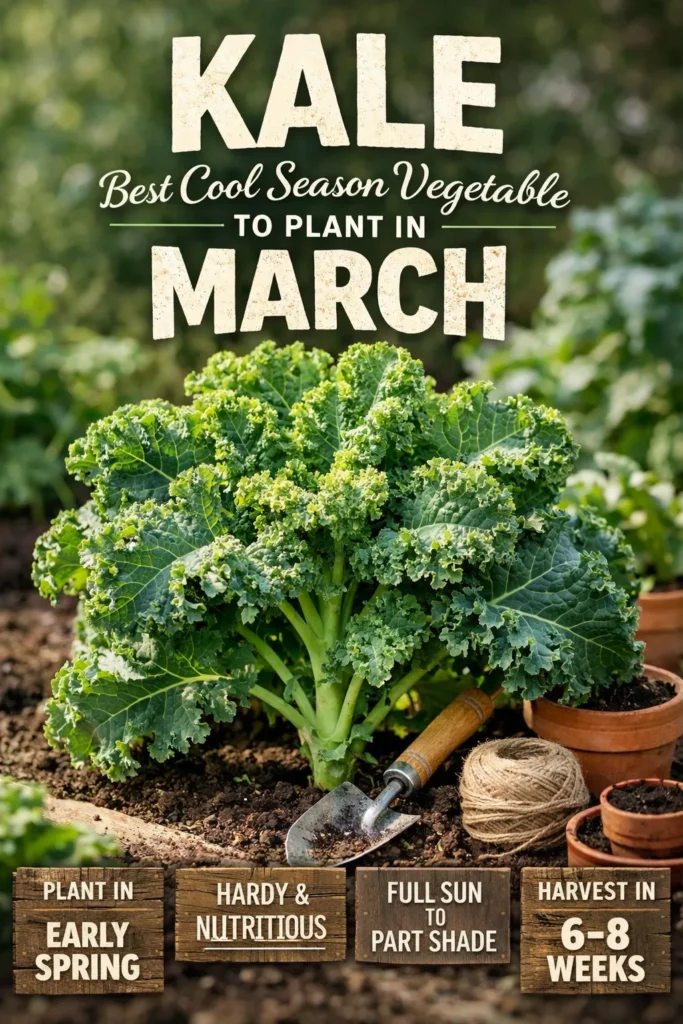
Kale is arguably the most durable of the cool-season greens. It can be planted in March and will often produce well into late spring without bolting.
- Why Plant Now: Cool weather keeps kale tender and sweet. Once the heat arrives, the leaves become tough and pungent. Planting now locks in that delicate flavor.
- 2026 Recommendation: While green kale is standard, ‘Red Russian’ is tender and beautiful for 2026 salads, while ‘Lacinato’ (dinosaur kale) is a favorite for its pebbled texture.
- Care: Harvest the outer leaves first, allowing the center of the plant to continue producing new growth.
5. Lettuce
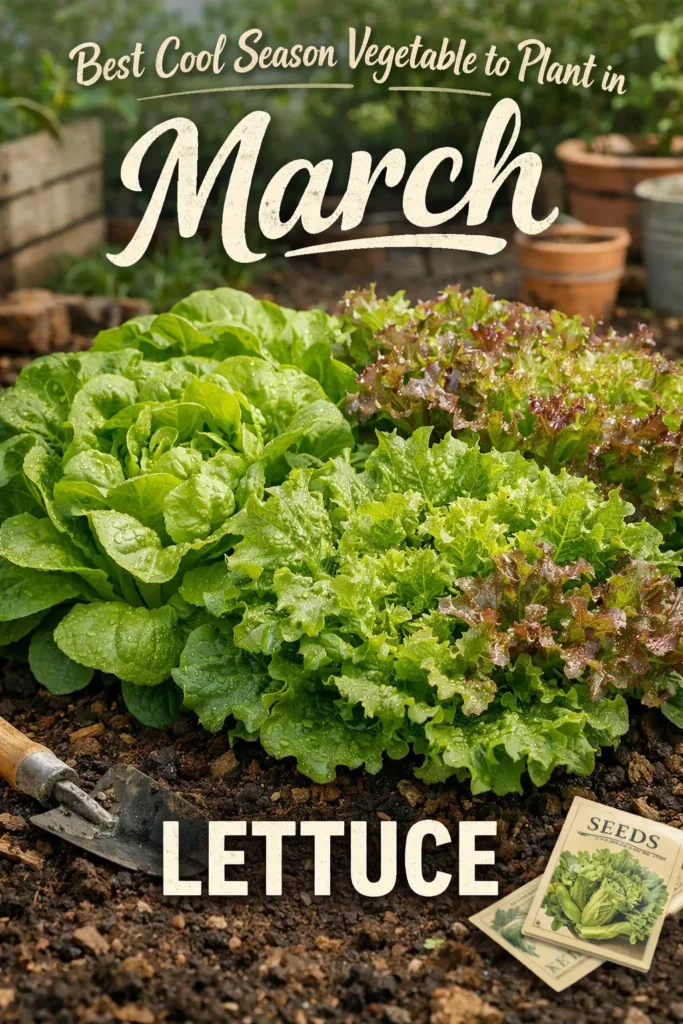
March is the perfect time to start “Cut and Come Again” lettuce patches for a continuous salad supply.
- Why Plant Now: Lettuce seeds germinate best in cool soil. Planting in March allows you to harvest several times before the intense summer sun hits.
- 2026 Recommendation: ‘Black Seeded Simpson’ is a reliable 2026 choice for heat tolerance later in the season, while ‘Merlot’ provides a striking deep red hue.
- Care: Use a cloche or row cover if a heavy freeze is predicted to keep the tender leaves from getting “burnt” by ice.
6. Onions
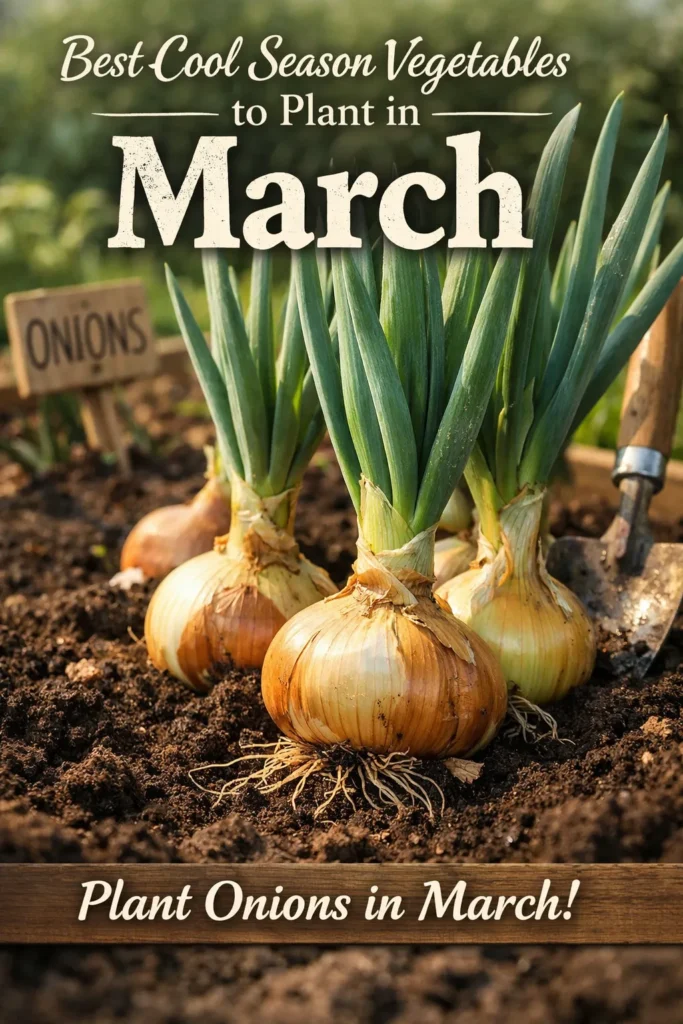
Whether starting from seeds or “sets” (small bulbs), onions need the long days of spring to develop their foliage before bulbing.
- Why Plant Now: Onions need a long lead time. Planting in March ensures they develop enough “green” to power the growth of large bulbs by mid-summer.
- 2026 Recommendation: ‘Stuttgarter’ sets are the 2026 recommendation for beginners due to their high storage life and ease of planting.
- Care: Keep the area weed-free. Onions are poor competitors and will stay small if forced to fight for nutrients.
7. Carrots
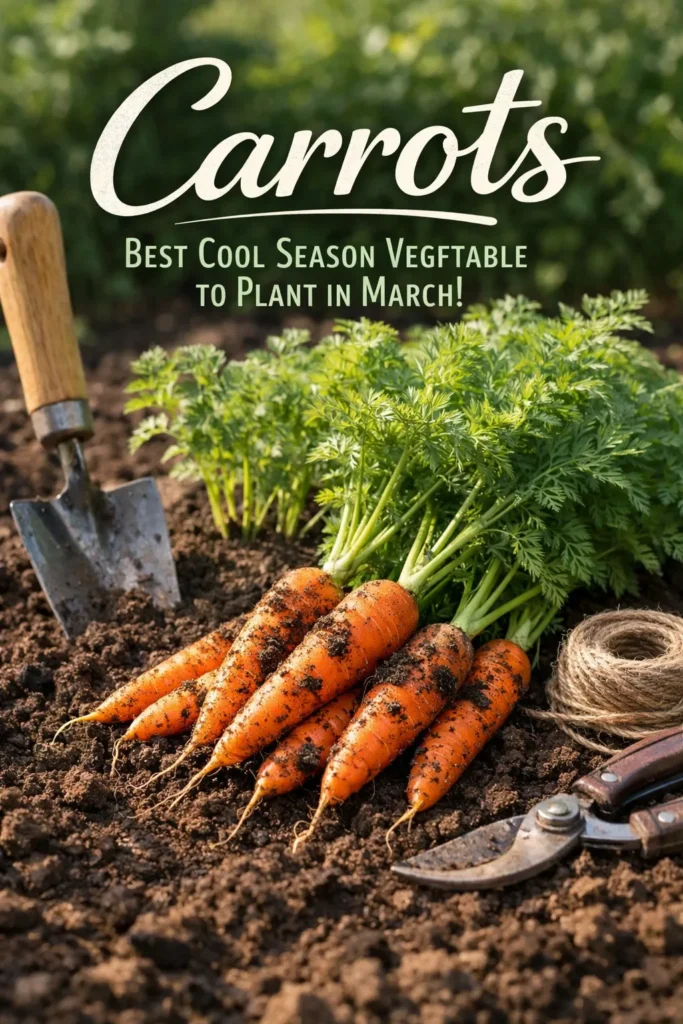
Carrots require patience but rewarded the March gardener with the sweetest roots imaginable.
- Why Plant Now: Carrot seeds can take 2-3 weeks to germinate in March. Starting now ensures they mature while the ground is still moist and soft.
- 2026 Recommendation: ‘Nantes’ varieties are the top 2026 pick for their cylindrical shape and lack of a woody core.
- Care: Mix carrot seeds with sand before sowing to help space them out, and never let the soil surface dry out during the long germination period.
8. Broccoli
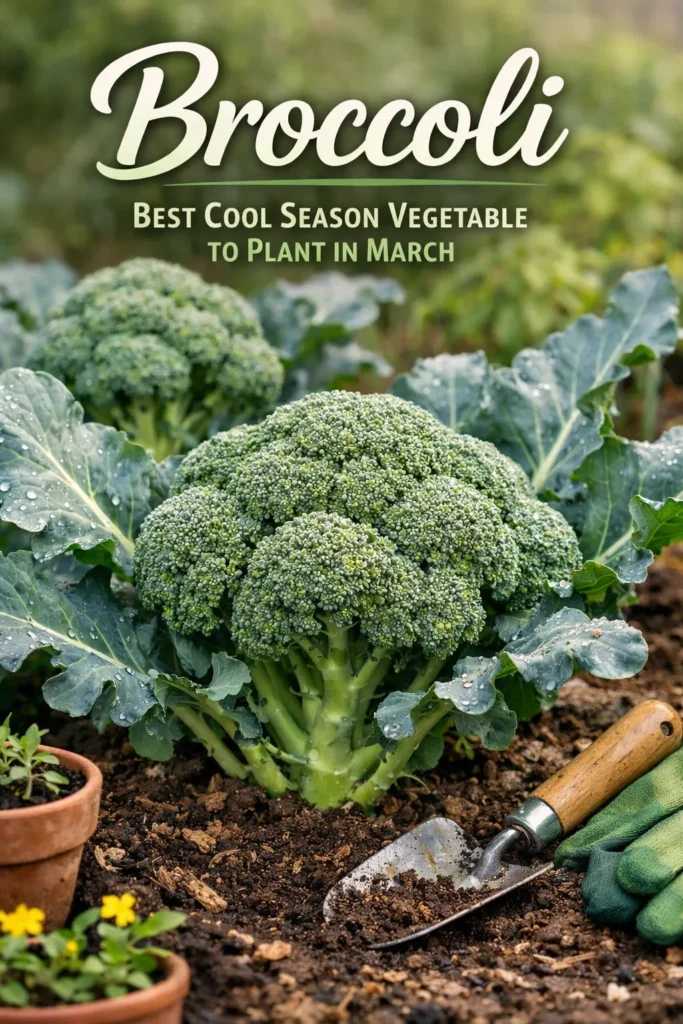
A staple of the healthy 2026 garden, broccoli thrives when it can head up before the summer humidity begins.
- Why Plant Now: If broccoli matures in high heat, the heads will separate and flower (bolt) almost overnight. March planting prevents this.
- 2026 Recommendation: ‘Waltham 29’ is a classic, but ‘Purple Sprouting’ broccoli is the “it” plant of 2026 for its gourmet appearance and extended harvest window.
- Care: Broccoli is a heavy feeder. Amend the soil with high-quality organic compost or well-rotted manure before transplanting.
9. Potatoes
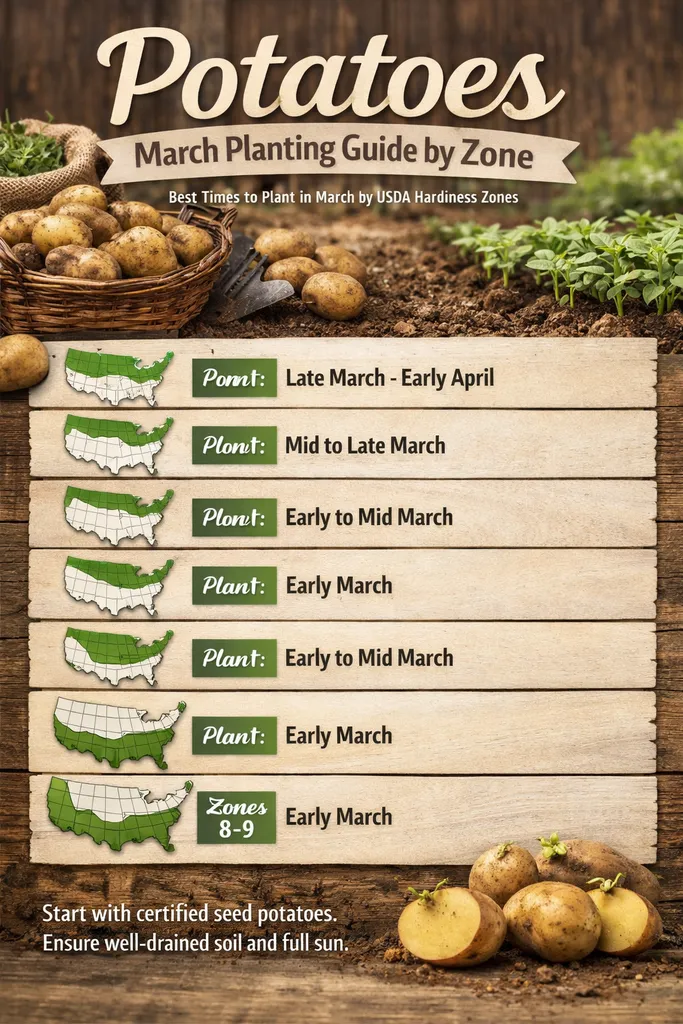
“Chitting” potatoes (letting them sprout) in early March leads to a much earlier harvest.
- Why Plant Now: Potatoes love the damp, cool spring. Getting them in the ground by late March allows the tubers to develop before soil temperatures get too high.
- 2026 Recommendation: ‘Yukon Gold’ is the versatile favorite, but ‘Adirondack Blue’ is gaining massive popularity in 2026 for its high antioxidant levels and purple flesh.
- Care: “Hill” your potatoes by piling soil or straw around the stems as they grow to protect the tubers from sunlight.
10. Swiss Chard
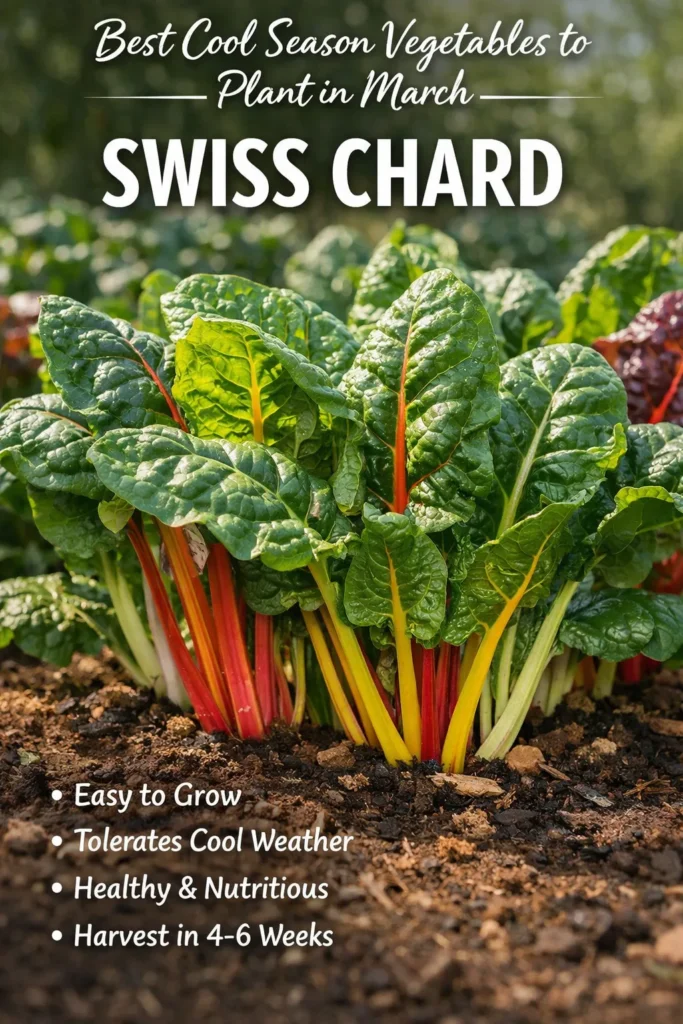
Often overlooked, Chard is a powerhouse of nutrition and one of the most beautiful plants in the March garden.
- Why Plant Now: Chard is more heat-tolerant than spinach but loves the cool start of March to establish a deep taproot.
- 2026 Recommendation: ‘Bright Lights’ is the 2026 must-have, featuring stalks in neon shades of pink, yellow, and orange.
- Care: Like kale, you can harvest individual leaves as needed. It will continue to produce even as temperatures begin to rise in May.
March Garden Checklist: Beyond Planting
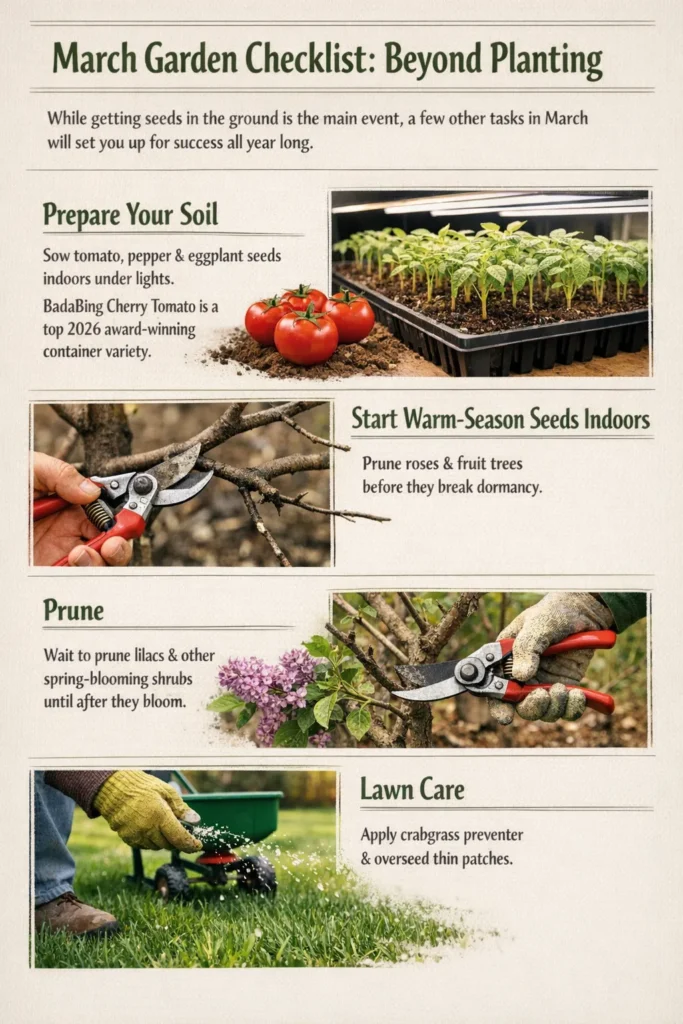
While getting seeds in the ground is the main event, a few other tasks in March will set you up for success all year long.
- Prepare Your Soil: In March, sow tomato, pepper and eggplant seeds indoors under lights. They require roughly 6-8 weeks to become hardy enough for transplants in May. BadaBing Cherry Tomato is a one of the 2026 award-winning varieties suited to containers.
- Start Warm-Season Seeds Indoors: Late March is a great time to prune roses and fruit trees (like apples and pears) before they break dormancy. But hold off on pruning spring-blooming plants like lilacs until after they bloom.
- Prune: Late March is a good time to prune roses and fruit trees (like apples and pears) before they break dormancy. However, wait to prune spring-flowering shrubs like lilacs until after they bloom .
- Lawn Care: In the US/Canada, late March is the time to apply a crabgrass preventer to your lawn. It’s also a good time to overseed thin patches in cool-season grasses .
FAQ
1. What exactly are “cool-season” vegetables?
Cool-season vegetables are those that do best in the milder temperatures of spring and fall. They thrive in cooler weather and can usually tolerate light frosts, unlike warm-season crops (including tomatoes, peppers and cucumbers) that are killed by frost and require warm soil to grow. Many cool-season crops taste sweeter after a light frost anyway.
2. Why should I plant them in March?
March is a changeover month for lots of areas. The soil is starting to thaw and warm, but the heat of summer isn’t there yet. Planting cool-season crops now means they’ll germinate and grow before hot weather triggers them to “bolt,” or go to flower, which can make them bitter You can get ahead with your garden and start enjoying fresh harvests in late spring or early summer.
We’ve put together a list of the best vegetables for March planting, sorted by how they are usually planted (seed or transplants).
3. Which cool-season vegetables can I plant directly as seeds in my garden?
Many root vegetables and leafy greens have fragile root systems and are best sown directly into the garden soil. Here are some top choices:
- Root Vegetables: Beets, carrots, radishes, turnips, and parsnips .
- Leafy Greens: Lettuce, spinach, Swiss chard, kale, collards, and mustard greens . For a continuous harvest of lettuce and peas, you can make small, successive plantings every couple of weeks until May .
- Legumes: Peas (like snow peas and snap peas) .
- Other: Onions (from seeds) .
4. Which vegetables are better to plant as transplants or starts in March?
Some crops benefit from a head start. You can either purchase young plants (transplants) from a nursery or start your own seeds indoors to move outside later in the month. These include:
- Brassicas: Broccoli, cabbage, and cauliflower are excellent candidates for transplanting to ensure a good harvest before the heat sets in .
- Leafy Greens: Head lettuce and Chinese cabbage can also be transplanted .
- Perennial Vegetables: March is a great time to plant perennial edibles like asparagus crowns, rhubarb, and artichokes .
5. What about potatoes? Are they planted in March?
Absolutely! There are various cold-tolerant herbs that will thrive when planted in March. Cilantro and dill can be sown directly from seed in your garden beds. With parsley, which takes its own sweet time to germinate, it’s usually better just to transplant seedlings.
6. Can I plant herbs in March, too?
Absolutely! There are various cold-tolerant herbs that will thrive when planted in March. Cilantro and dill can be sown directly from seed in your garden beds. With parsley, which takes its own sweet time to germinate, it’s usually better just to transplant seedlings.
7. I’ve heard of “cut-and-come-again” greens. Which March-planted crops work for this?
Many leafy greens are ideal for this harvesting style, which lets you get multiple harvests from the same plants. Arugula, lettuce and spinach are perfect for this. When you snip off the bigger outer leaves or trim and harvest the whole plant 1 inch above soil, new smaller inner leaves will keep growing for another harvest. Kale is another great choice where you can harvest just the outside leaves and your plant will continue producing.
8. What are the easiest Brassicas (cabbage family) for a beginner to plant in March?
If you’re new to gardening, kale and cabbage are the most forgiving easiest Brassicas to grow. They can be harvested at nearly any stage, from baby leaves to mature heads. Broccoli and cauliflower are a little harder, since their heads — which are flowers before they open up — need to be harvested before the flowers bloom, which can get tricky if a warm spell hits suddenly.
9. Are there any special tips for planting root vegetables like carrots and radishes?
Direct sowing and careful thinning, that’s the key to success with root vegetables. Their roots are contrarian and don’t care to transplant well. For sowing seeds such as carrots or radish, space them approximately 1 inch apart. When they germinate, you might need to thin the seedlings so that they’re 1-3 inches apart (depending on type). Which provides enough space for the roots to reach their full size without overcrowding. These spicy spheres are particularly gratifying for newbies: Heat your grill, and you can be eating radishes from seed in as little as 28 days.
10. How do I know if my soil is ready for planting?
You should not be working your soil when it’s too wet, because doing so causes damage to its structure by compacting soil particles and squeezing out the oxygen. As a general rule, the soil should no longer be soggy and crumbles in your hand. Here’s another tactic: A soil thermometer is a helpful tool; many cool-season crops can be planted when the soil temperature consistently reaches into the 40s or 50s°F. One of the biggest rules is to not disturb your soil when it’s too wet: That kills its structure because you’ll compact soil particles and compress oxygen out.” As a general rule, do not plant until the soil has dried and can be crumbled in your hand. A soil thermometer can also be useful — many cool-season crops should go in the ground when the soil temperature is regularly in the 40s or 50s°F.
11. My garden beds aren’t ready. Can I still grow these vegetables in March?
Yes! Container gardening is a great solution. Use large containers with drainage holes, and fill them with a high-quality “potting soil” (not “garden soil”). Containers are ideal because they heat up quickly, warming your plants for an early start. Just remember mushrooms are also going to dry out more quickly, so you’ll have to tend to them a little bit more.
12. How can I protect my new March plantings from unexpected cold snaps?
Spring weather can be unpredictable. When in doubt, always have row cover at the ready. This lightweight cover can be draped right over plants to guard them against a hard freeze. You can also cover with old sheets or plastic sheeting (do not let it touch the foliage) for temporary protection.
Final Verdict
Gardening in March is an act of faith and optimism. While the winter-battered gardener might be tempted to wait for the guarantee of summer warmth, the canny grower knows that the real tastes of spring — the sweet snap of a pea, the delicate crispness homegrown lettuce brings and earthy bite of a fresh pulled radish — are possible only by starting now.
Choosing the proper cool season vegetables to grow in March 2026 sets you up for your most successful gardening year. You vanquish the pests, you dodge the summer heat and you make every square inch of your garden earn its keep. Stick to the basics: amend your soil with compost, don’t plant too deeply, water regularly and always have those row covers at the ready for rogue frosts.
So whether you’re prepping a generous backyard plot in the US, raised berms in Canada or some containers on a UK balcony, seize this critical window. Come in the next few months, and soon you will be able to sit down to a delicious meal all from your


Leave a Reply